



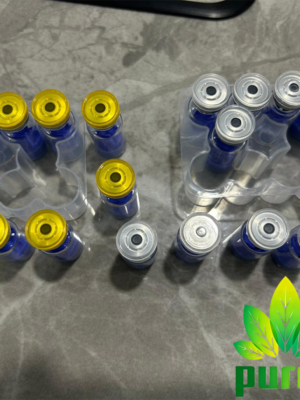
Cag5+Sm5 10MG

Product details
Abstract
Despite the worldwide epidemic of obesity, there remain few approved pharmacological treatment options to bridge the gap between lifestyle therapy and bariatric surgery. Cagrilintide is an amylin-analog, now being developed in combination with the GLP-1 agonist semaglutide to achieve sustained weight loss in persons with overweight and obesity. Amylin, released with insulin from beta cells in the pancreas, induces its satiating effect via both the homoeostatic and hedonic regions of the brain. Semaglutide, a GLP-1 receptor agonist, reduces appetite via GLP-1 receptors in the hypothalamus and increases the production of insulin, and reduces glucagon secretion, delaying gastric emptying. These separate, but related mechanisms of action of an amylin-analog and a GLP-1 receptor agonist appear to have an additive effect on appetite reduction. Given the heterogeneity and complex pathogenesis of obesity, combination therapy with multiple pathophysiological targets is a logical approach to increasing weight loss response with pharmacotherapy. Cagrilintide alone, as well as cagrilintide in combination with semaglutide have shown promising weight loss in clinical trials that supports the further development of this therapy for sustained weight management.
Five drug therapies, orlistat, liraglutide, semaglutide, phentermine-topiramate, and naltrexone-bupropion, are available for long-term weight management. Additionally, several medical devices are available for short-term and long-term use. Bariatric surgery yields substantial and sustained weight loss, although, due to the high cost and a small risk of serious complications, it is generally recommended only for patients with severe obesity.2 Despite the availability of several options to treat obesity, there remains a treatment gap for patients with moderate obesity who have tried lifestyle interventions but do not qualify for bariatric surgery. Here lies a significant potential for pharmacotherapy to aid these patients in achieving sustained weight loss. The new weight-loss drug cagrilintide has shown promising effects on achieving sustained weight loss for people with obesity.
To address the chronic disease of obesity, it is of utmost importance to develop novel, safe, and effective AOMs. When medications for weight management are used as an adjunct to lifestyle intervention, they offer a rational pathway not only to weight loss but also to the treatment and prevention of cardiometabolic disease.7 Unfortunately, current AOM options are limited and only a small fraction of eligible patients are actually offered pharmacologic treatment.6 Once-weekly cagrilintide, a long-acting amylin analog that is non-selective for the CTRs and amylin receptors, has shown promising weight-loss effects as well as improvement in cardiometabolic factors. Cagrilintide 4.5 mg was shown to produce superior weight loss than liraglutide 3.0 mg over a 26-week period.23 Cagrilintide has been shown to be safe and tolerable both alone and in combination with the GLP-1 receptor analog semaglutide. The complementary MOAs of amylin-analog and GLP-1 receptor agonists appear to be a promising combination therapy with greater weight loss than any other currently approved AOM and the potential to further close the gap with bariatric surgery outcomes. Two clinical trials are ongoing to support the utility of this potential combination pharmacotherapy in treating people with overweight and obesity.
Shipping and Returns
Shipping cost is based on weight. Just add products to your cart and use the Shipping Calculator to see the shipping price.
We want you to be 100% satisfied with your purchase.
There are no question found.




Rating & Review
There are no reviews yet.